The Wrong Number That Leads to a Trading App
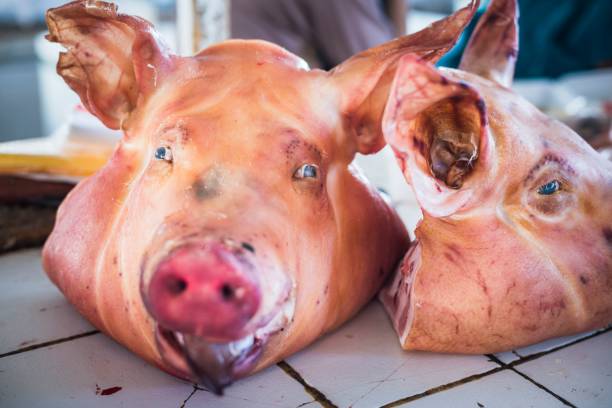
But it isn’t. Over the next few days, that “wrong number” keeps texting. They ask how your day is going. They share a casual story about their own work, their hobbies, their frustrations with a recent investment. They seem normal, even sympathetic. This, in the world of online scams, is the opening move in a devastating scheme known as pig butchering. And it is one of the most dangerous threats to middle-class Americans today, especially those aged 45 to 64 who are actively managing retirement savings and looking for legitimate ways to grow their wealth.
Pig butchering is a disturbing nickname that comes from the idea of “fattening up a pig before the slaughter.” The scammer, often part of an organized criminal operation overseas, takes weeks or even months to build a relationship of trust with you. They are not after your credit card number or your bank login today. They are after your entire nest egg. And the luring tool is often a seemingly harmless wrong-number conversation that slowly pivots to a trading app.
Here is how the sequence works. After establishing a friendly rapport over a week or two, the scammer will mention their own financial success. They might say they have a cousin who works as a financial analyst or that they discovered a “secret” cryptocurrency trading platform that returns huge profits with minimal risk. They send screenshots of their own account balance, showing thousands of dollars in gains. They never ask for your money directly at first. Instead, they ask you to download a trading app. The app looks professional. It has real-time price charts, news feeds, and a slick user interface. It might even be a clone of a well-known legitimate platform like Coinbase or Binance, but with a slightly different name.
You are encouraged to deposit a small amount, maybe fifty or a hundred dollars, just to “test the waters.” To your surprise, it works. Within a day, your balance shows a profit. You try to withdraw a small portion, and the money actually arrives in your bank account. This is the hook. The scammer is building your confidence, knowing that the withdrawal of a small amount proves nothing about the platform’s integrity. In reality, the app is a total fabrication. The prices are fake, the trading activity is fake, and your “account balance” is just a number on a screen controlled by the scammers.
Once you are convinced, the scammer pushes you to invest more. They may call you, text you at all hours, or even use video calls to create a sense of urgency. They will tell you about a “limited-time opportunity” to buy a new cryptocurrency token or to leverage your position for higher returns. You empty your savings, your 401(k) rollover, your home equity line. The app shows you are a millionaire on paper. Then, when you try to withdraw a large sum, the platform flags your account for “security reasons.” A customer support agent, who is part of the same criminal enterprise, tells you that you need to pay a tax, a fee, or a penalty to release your funds. You pay it, and the fee keeps growing. Eventually, the app stops working. The scammer disappears. Your money is gone.
The middle-class Americans targeted by this scam are not foolish. They are often educated, hardworking, and careful with their money. But the pig butchering scam works because it exploits a fundamental human need: the desire for connection and the hope for a better financial future. The scammer poses as a friend, a potential romantic interest, or a savvy mentor. The wrong-number text feels random and innocent. That is exactly why it works.
To protect yourself, you must adopt a simple rule: never engage with a wrong-number text. Delete it immediately. Do not reply, even to be polite. The moment you respond, you have signaled that you are a live person who can be manipulated. Do not download any trading app recommended by someone you have never met in person or who contacted you out of the blue. Legitimate cryptocurrency platforms do not recruit users through unsolicited text messages. And finally, be deeply suspicious of any investment that promises guaranteed high returns with low risk. That combination does not exist in the real world.
Pig butchering is not a new scam, but it is growing rapidly as criminals refine their scripts and tools. If you or someone you know has received a wrong-number text that later turned into a pitch about a trading app, recognize it for what it is: the beginning of a slaughter. The only safe response is to block the number, report it to the Federal Trade Commission, and walk away. Your retirement savings are too precious to be fed to a pig.
Scam Watch
Protect it before they take it.

How Retail Stores Use Extended Warranties and Price Matching to Overcharge You
The Pop-Up That Freezes Your Browser