How to Spot Title Washing: When a Salvage Car Pretends to Be Clean

Title washing works because each state has its own rules for applying a “salvage” or “junk” label. A car totaled in Illinois might be resold to a dealer in another state. That dealer repairs it, applies for a rebuilt title in a state that does not properly check the prior history, and gets a clean title. To you, the next owner, it looks like a normal car. The accident, the flood, the fire, the frame damage—all of it disappears from the official record. You might never know until something breaks, or worse, until an airbag fails to deploy.
How do you protect yourself? Start with the vehicle identification number, or VIN. Do not trust the seller’s story. Run your own check using a reputable service like Carfax or AutoCheck. But understand the limits: these reports only show what has been reported. If an insurance company never filed a claim, or if the car was titled in a state with poor data sharing, the history can come up clean. That is why you need to get hands-on.
Look at the car. Open the hood and check the frame rails. If the metal looks wavy, wrinkled, or patched with fresh paint, that is a sign of straightening. Check the doors and trunk lid. Uneven gaps, misaligned panels, or paint that does not quite match are red flags. Look under the carpet in the trunk and under the front seats. Sand, mud, or a musty smell can mean flood damage. Rust on bolts and screws that are supposed to be clean suggests water intrusion. A salvage title is often the result of flood damage because insurance companies would rather total the car than risk electrical gremlins. You do not want that car.
Also check the odometer. Not for a separate rollback scam, but for clues. If the interior shows heavy wear—worn seats, loose gear shifter, faded pedals—but the odometer reads only 40,000 miles, think about whether that is believable. A car that sat damaged for months might have a true mileage far higher than what the title states. Title washing and odometer tampering often go together.
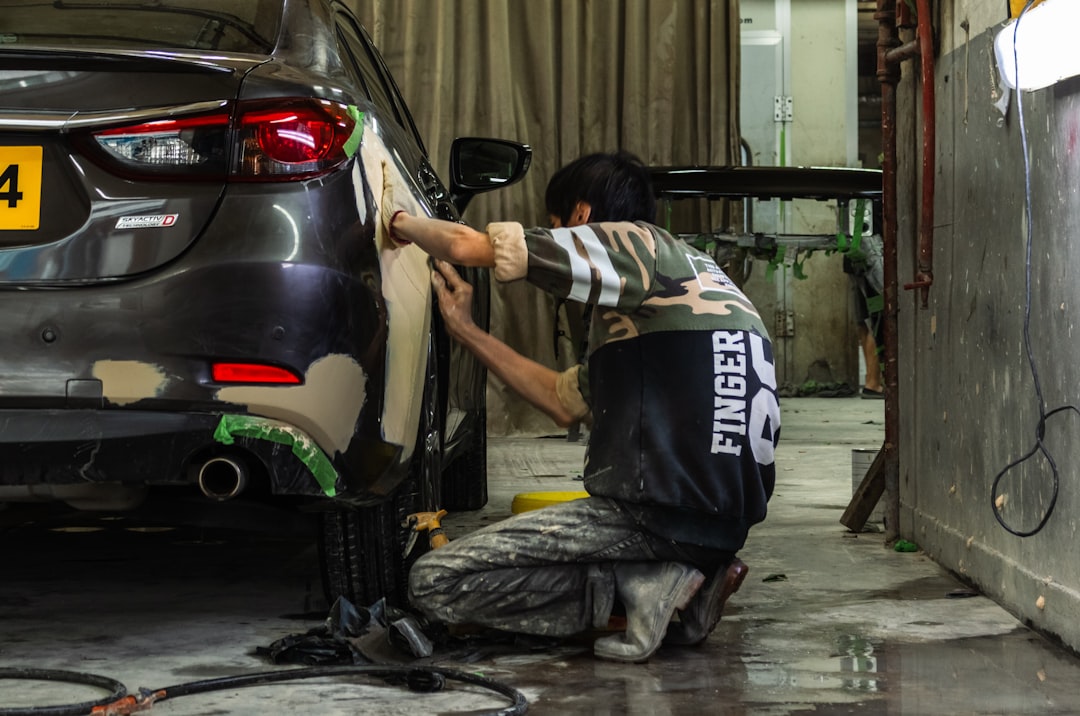
Do not rely on a dealer’s promise. Even honest dealers can be tricked by a washed title from a previous owner. The most careful move is to take the car to an independent mechanic before you buy. Pay the $150 for a thorough inspection. Ask the mechanic to check welds, look for sanding marks under the paint, and use a paint thickness gauge. A car with repainted panels all over the shop is not a low-mileage survivor. It is a rebuild that someone is hiding.
Another common trick is the “rebranded rebuilt” title. Some states do allow a car with a salvage history to be inspected and legally titled as “rebuilt” or “reconstructed.“ That status is not a scam if disclosed. But a dishonest seller will advertise the car as having a rebuilt title, while conveniently failing to mention that the rebuild was shoddy, or that the car was not repaired properly. Rebuilt does not mean like new. It means a salvaged car was patched up enough to pass an inspection. That inspection may have been cursory.
Do not assume that using a well-known used car chain protects you. Some national sellers have been caught selling washed-title cars, though they usually settle and pay penalties. The real burden is on you. Before you hand over cash or sign a loan, get the title history in writing. Ask the seller to include a guarantee in the bill of sale that the title is clean and that they have no knowledge of salvage branding. If they hesitate, walk away. That hesitation is your signal.
Title washing is not rare. It happens every day, in every state. The best defense is a mix of suspicion and preparation. Never trust a used car’s title just because it looks official. Remember that a piece of paper can be laundered just like money. The car underneath that paper is what you are actually buying. If the frame has patches, if the airbags might have been deployed and replaced with cheap knockoffs, if the wiring smells of mildew, you are buying someone else’s disaster. Do not let the price tempt you. A clean title is not a guarantee. It is a claim you need to verify. Sight, sound, and an independent mechanic are your true allies. Take the time to dig into that VIN and to crawl under that car. Your safety, and your wallet, depend on it.
Scam Watch
Protect it before they take it.

#Title Washing: The Used Car Scam That Can Turn Your Purchase Into a Legal Nightmare

How to Hover Over a Link Without Clicking